YourBooks · Books that feed your forecast
Automate your books. Understand your business. Plan the next move.
Books kept current and open to you any day, not a bank balance you have to guess from. The forecast reads straight off them.
You keep your corporate secretary. Only the bookkeeping moves.
The bookkeeper you never chose
It came bundled with your incorporation
Most founders got their bookkeeping the same way: it was offered alongside the corporate secretary, or the registered agent, at incorporation, and you said yes because it was one less decision. Nobody evaluated it. So you never see the books. You do not see the statements either, and when you ask for them it takes weeks, which is too late to plan anything with. What you actually run the company on is the bank balance, and the bank balance is not a running view of what you are owed, what you owe, or where cash is heading. That is not the provider failing. It is the product you bought: a set of books built to file, not to read.
Corp sec and bookkeeping are two services. You keep the first and move the second.
How the switch works
We do the move with you. Two things need care, the handover and the sign-off, and both are ordinary.
Hand over the history
Your full general ledger since inception, from Xero, QuickBooks, or your bookkeeper's export. You keep your own chart of accounts, or map it onto ours. We do this part with you.
Sign off before anything commits
Everything lands in staging first. Every entry has to balance and every account has to resolve. You see a trial balance and per-year P&L and balance sheet, and nothing touches live books until you say so.
Then just forward
From then on, forward a receipt or a bill and it gets booked. Entries post, expenses categorise, the bank reconciles, and the books stay close-ready instead of three weeks behind.
A bad import cannot half-write your ledger. Re-importing replaces the batch instead of duplicating it. Your history is recreated, not restarted.
Books you can finally see
Open the ledger and the statements yourself, any day, with what you are owed and what you owe on them. No asking, no waiting, and no bank balance standing in for all of it.
Automated journal entries
Transactions and bills post to the right accounts on their own. Expense capture and categorisation happen as the money moves, not at month-end.
Reconciliation that keeps up
Bank activity matches to your ledger as it happens, so the books are always close-ready instead of a quarterly fire drill.
Statements you can open yourself
A real general ledger, P&L, and balance sheet, always current, with receivables and payables on them. The numbers your board, your filing, and your forecast all depend on, without asking anyone for them.
Any currency, any number of entities
Multi-currency and multi-entity from the start, with a chart of accounts seeded to the kind of business you run.
YourBooks + YourCFO
The same ledger you file from now tells you your runway
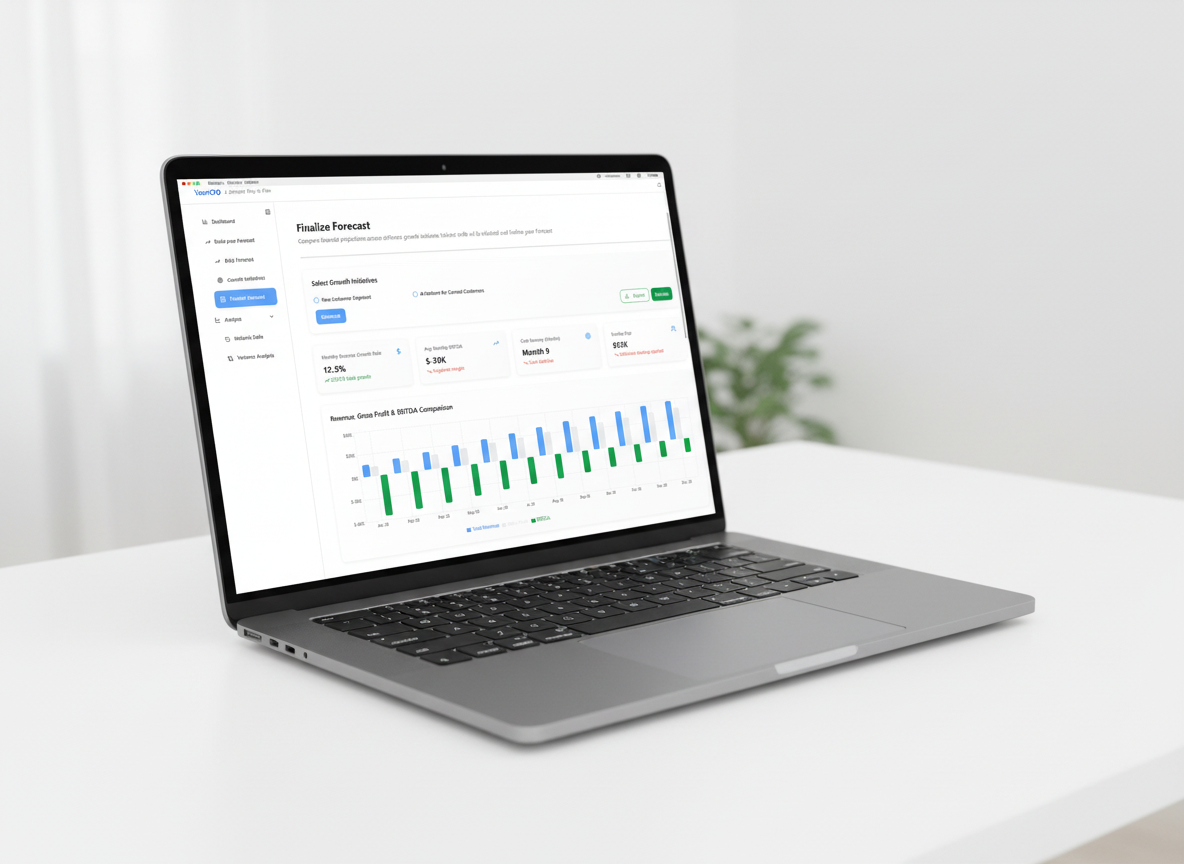
A bookkeeper tells you what happened. Once your general ledger is in YourBooks, it flows into the YourCFO forecast on its own, so burn, runway and variance come out of the books instead of a spreadsheet you rebuild at month-end. No bookkeeping firm and no bookkeeping tool gives you that.
Burn and runway, from the ledger
Your history flows into the forecast the moment the books are in. No spreadsheet in between, no month-end rebuild.
Decisions with a number attached
Model a hire, a campaign, or a price change as an initiative and see what it does to runway before you commit.
Investor-ready when the raise comes
The model is already anchored to real numbers, in your currency, in the format investors ask for.
Your model, not a SaaS template
The chart of accounts and the forecast engine are both seeded to what you sell, so revenue, COGS and inventory lines are the ones your business actually uses.
From the blog
Writing for operators
Practical pieces on switching your books, runway, and the numbers founders actually get asked about.
Financial Planning
FP&A vs Accounting: What Each One Answers for a Startup
FP&A vs accounting for startups: accounting records and files what happened, FP&A plans what happens next. What each one answers and why you need both.
Financial Planning
Employer Contributions in Southeast Asia: EPF, CPF, SSS, BPJS and SSO Side by Side
Employer EPF, CPF, SSS, BPJS and SSO contribution rates and ceilings for Malaysia, Singapore, Philippines, Indonesia and Thailand, with worked costs per hire.
Financial Planning
Receipt OCR and Expense Categorisation: Why Vendor Memory Beats a Smarter Model
Why receipt OCR rarely breaks your books but expense categorisation does, and why vendor memory beats a smarter AI model for startups in SEA.
Keep your corp sec. Move your books.
A conversation about what you would hand over, what you would keep, and what you would sign off on before anything commits.